
Join us for a deeply relaxing Gong Bath with an Advanced Sound Practitioner.
A Gong Bath is a deeply immersive sound meditation where you are surrounded by the soothing vibrations of gongs and other healing instruments. As you rest comfortably, the sounds help calm the mind, relax the body, and create space for deep rest and reflection.
Many people leave feeling grounded, peaceful, refreshed, and emotionally lighter.
No experience is needed — simply come as you are, get comfortable, and allow yourself to be bathed in sound.
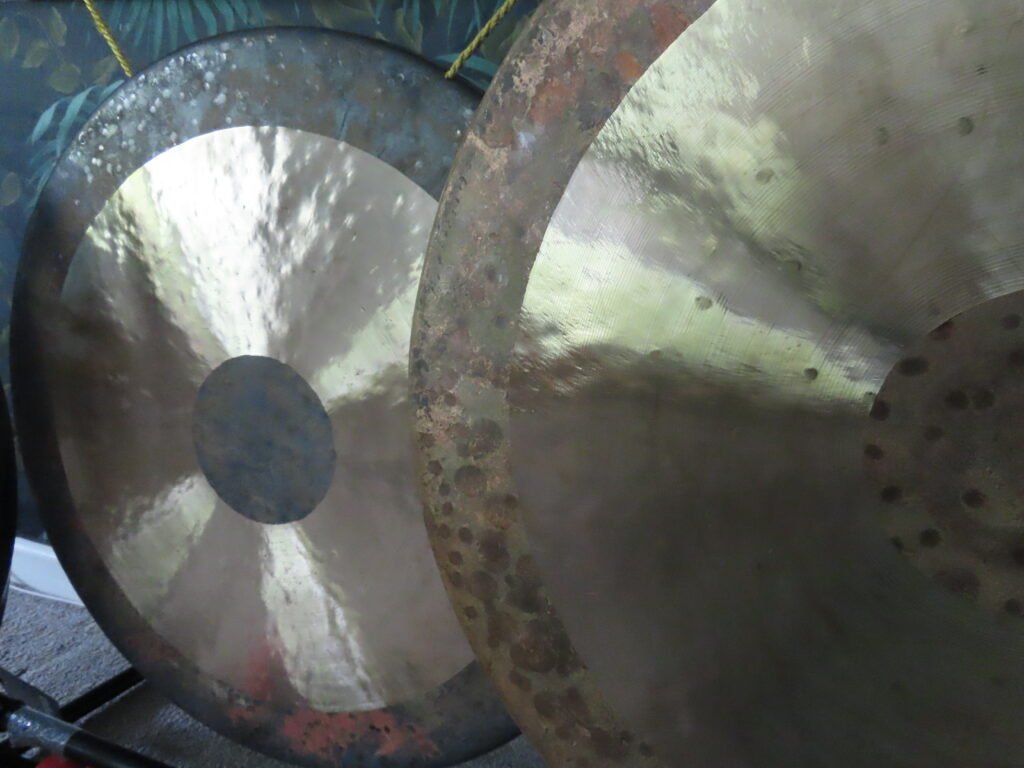
Using Symphonic,Chau and Wind gongs and other supporting instruments, you’ll be guided into a restorative space where mind and body can truly unwind.
Sound has the power to calm the nervous system, ease tension and invite deep rest. Simply lie back, get comfortable, and allow the sounds and vibrations to wash over you.
A nurturing experience for anyone seeking stillness, balance and renewal.
Spaces are limited. See below on how to book. When: Every 4th Tuesday of the month. Next one 27th October 2026
Where: The Printworks, Pym Street, Tavistock
Price: £15 – cash on the day.
How to book: email sue@wild-earth-flow.com to book your place or receive more details.
What is a Gong Bath?
A gong bath is a form of sound meditation in which participants relax while immersed in the vibrations and resonant tones of one or more gongs. Despite the name, there is no water involved. The word “bath” refers to the sensation of being bathed or surrounded by sound.
During a session, people usually lie comfortably on mats or blankets with cushions, eye masks, or bolsters, allowing the sounds and vibrations to wash over them. The experience is not a performance or concert in the traditional sense. Instead, it is designed to create a deeply immersive atmosphere that encourages relaxation, meditation, reflection, and rest.
The gong produces complex layers of tones, frequencies, and overtones that can be felt physically as well as heard. Many people describe the experience as soothing, meditative, emotional, dreamlike, or deeply restorative.
The Origins of Gong Baths
Gongs have ancient roots and have been used ceremonially and spiritually for thousands of years, particularly across Asia. Early forms of gongs originated in regions such as China, Indonesia, Burma, Thailand, and Vietnam, where they were used in rituals, celebrations, healing practices, meditation, and community gatherings.
In many ancient traditions, sound was considered sacred and transformative. Vibrational instruments such as gongs, bells, and drums were believed to influence consciousness, restore harmony, and connect people with deeper spiritual or energetic states.
The modern form of the “gong bath” became increasingly popular in the West during the twentieth century through the rise of meditation practices, holistic wellness, Kundalini yoga, and sound healing traditions. Teachers such as Don Conreaux helped introduce gong meditation to wider audiences internationally.
Today, gong baths are commonly offered in yoga studios, wellness centres, retreats, healing spaces, and nature-based wellbeing events.
What Happens During a Gong Bath?
A gong bath usually begins with a few moments of grounding or guided relaxation to help participants settle into the space. People are encouraged to get comfortable, slow their breathing, and simply rest.
As the session begins, the practitioner gradually introduces sound through the gong and sometimes other instruments such as singing bowls, chimes, drums, or tuning forks. The sounds often build in waves, creating an immersive and constantly changing soundscape.
Unlike ordinary music, gong sounds are not structured around melody or rhythm. The vibrations can feel unpredictable and expansive, which may help interrupt mental chatter and encourage a meditative state. Some people drift into a sleep-like relaxation, while others remain fully aware but deeply calm.
Our sessions are around forty-five minutes to one hour, with additional time to return back to reality.
Afterwards, people often describe feeling peaceful, grounded, emotionally lighter, refreshed, or mentally clearer. Some feel energised, while others experience a deep sense of rest and stillness.
Why Do Gong Baths Feel So Powerful?
Although scientific research into sound healing is still developing, there are several theories about why gong baths can feel so profound.
One explanation involves the nervous system. Deep sound experiences may help the body shift away from the “fight or flight” response and towards a calmer parasympathetic state associated with rest, recovery, and relaxation. This can encourage slower breathing, reduced tension, and a sense of calm.
Another theory relates to brainwave states. Some practitioners believe repetitive frequencies and immersive sounds may support states associated with meditation, creativity, and deep relaxation, particularly alpha and theta brainwave activity.
There is also the physical experience of vibration itself. Because the body contains large amounts of water and soft tissue, sound vibrations can sometimes be felt physically throughout the body. Many people report sensations of warmth, tingling, heaviness, release, or energetic movement during a session.
The immersive nature of the sound can also support mindfulness. When the mind becomes absorbed in listening and sensing, it may temporarily let go of repetitive thinking patterns, worries, or distractions.
Reported Benefits of Gong Baths
People attend gong baths for many different reasons, and experiences vary greatly from person to person. One of the most commonly reported effects is deep relaxation. Many participants describe feeling calmer and more grounded afterwards, with reduced stress and mental overwhelm.
Some people notice improved sleep following a session, particularly if they struggle with busy thoughts or tension. Others experience emotional release, where feelings, memories, or emotions surface gently during the sound journey.
Gong baths can also support meditation, especially for those who find silent meditation difficult. The sound provides a focus for attention, making it easier for some people to settle into stillness.
Many participants describe a stronger sense of connection — to themselves, to nature, to creativity, or to a wider sense of presence and awareness. Some people leave feeling inspired, emotionally open, or mentally refreshed.
What Might You Experience?
Every gong bath is different, and there is no “right” way to experience one. Some people drift into deep relaxation or sleep, while others remain aware throughout the session. Some experience vivid imagery, colours, emotions, or sensations in the body, while others simply enjoy a peaceful period of rest.
For some, the experience can feel deeply meditative or even spiritual. For others, it is simply a calming and restorative wellbeing practice.
It is also completely normal to feel very little during a first session. Experiences can vary greatly depending on mood, stress levels, energy, environment, and the instruments being played.
Are Gong Baths Spiritual?
Gong baths can have a spiritual element, but they do not have to. Some practitioners work with ideas such as chakras, energy healing, or spiritual awakening, while others present gong baths simply as a form of relaxation, mindfulness, or sound meditation.
People from many backgrounds attend gong baths, including those with no spiritual beliefs at all. The experience is personal, and participants are free to engage with it in whatever way feels meaningful to them.
Is There Anyone Who Should Take Caution?
Gong baths are generally considered gentle and low-risk, but they may not suit everyone. People with sound sensitivities, certain neurological conditions, severe trauma responses, or some hearing conditions may wish to speak with a practitioner beforehand. Those who are pregnant are also often encouraged to mention this prior to the session.
A gong bath is intended as a complementary wellbeing practice and should not replace medical or psychological care where needed.
Gong Baths and Nature Connection
Gong baths are increasingly being combined with forest bathing, meditation, creativity workshops, retreats, and nature connection experiences. Many people find the combination of sound and nature especially powerful because both encourage slowing down, sensory awareness, presence, and emotional restoration.
The vibrations of the gong, combined with natural surroundings, can create a strong sense of grounding, calm, awe, and reconnection — something many people feel is missing in modern life.