
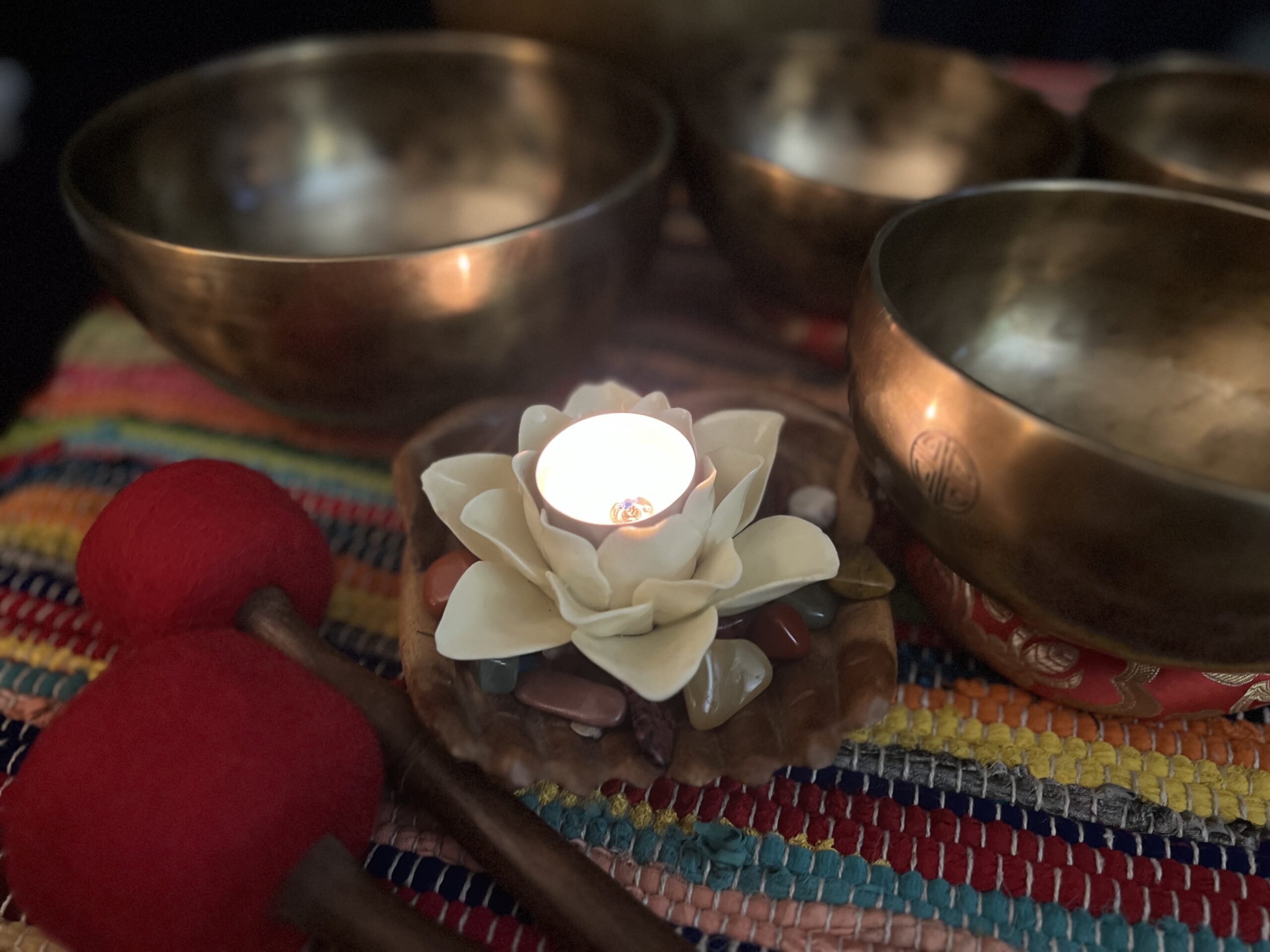
Sound therapy uses vibration, rhythm, and frequency to calm the nervous system, reduce stress, and support emotional wellbeing. Discover how tuning forks, drums, and sound baths influence the brain, stimulate the Vagus Nerve, and help the body move into deep relaxation and healing.
Sound has been used as a healing tool for thousands of years-through chanting, drumming, singing bowls, humming, and rhythmic ritual. Today, sound therapy is re-emerging as a powerful and evidence-backed practice that supports mental, emotional, and physical wellbeing. Whether through tuning forks, drums, voice, or immersive sound baths, the vibrations we experience can deeply influence the nervous system, helping the body shift from stress to calm and promoting balance throughout mind and body.
This article explores how sound therapy works, what science tells us about it, and why so many people – especially women navigating midlife and beyond – find it transformative.
What Is Sound Therapy?
Sound therapy, sometimes called vibrational therapy or sound healing, uses sound waves and frequencies to influence the body’s natural rhythms. Instruments like tuning forks with specific frequencies, gongs, drums, and singing bowls produce vibrations that interact with the body through both the sounds we hear and the sensations we feel. Because the human body is made up of around 60–70% water – an excellent conductor for vibration – sound waves travel efficiently through muscles, tissues, and cells. This can regulate breathing, reduce muscle tension, calm the mind, and support emotional release.
Modern sound therapy blends ancient healing traditions with contemporary neuroscience and psychology. It offers a gentle, non-invasive, and deeply grounding way to support holistic wellbeing.
How Vibrations Affect the Nervous System
One of the most significant effects of sound therapy is its impact on the nervous system. Calming, rhythmic, or low-frequency sounds tend to activate the parasympathetic nervous system, which governs rest, digestion, and repair. This helps counterbalance the fight-or-flight stress response that so many people experience chronically.
Brainwave Entrainment
Many sound-based practices use steady, rhythmic frequencies that encourage the brain to synchronise its electrical patterns with the external sound. This natural process, known as brainwave entrainment, can promote clarity, inner stillness, and deep relaxation.
For example:
Delta waves are linked with deep sleep and restoration.
Theta waves support creativity, intuition, and deep relaxation.
Alpha waves are associated with calm, focused awareness.
Tuning forks and singing bowls often produce frequencies that guide the brain into these soothing states, making them powerful tools for meditation, grounding, and stress relief.
Vagus Nerve Stimulation
Sound also affects the Vagus Nerve – the body’s primary communication line between the brain, heart, and gut. Deep vibrations, humming, chanting, and rhythmic sound can stimulate the Vagus Nerve, helping regulate heart rate, improve emotional balance, and create a sense of inner safety. Research shows that sound-based vagal stimulation can reduce anxiety, support emotional resilience, and lower inflammation, making it a promising tool for long-term wellbeing.
The Benefits of Tuning Forks
Tuning forks are especially effective because they produce precise, stable frequencies that travel cleanly through the body. When used near the ears, they influence auditory pathways and brainwave patterns; when placed on the body (especially weighted tuning forks), the vibrations move through muscles and connective tissue, helping areas of tension soften and release.
People often report improved circulation, deeper focus, reduced anxiety, and a grounded sense of clarity after tuning fork sessions. There is also growing evidence that vibrational therapy can support joint mobility, reduce pain, and improve overall mood. A study by Goldsby et al. (2017) found that sound meditations significantly reduced tension, fatigue, and negative mood states, supporting what many people already feel intuitively when they experience these gentle vibrations.
The Power of Drumming for Emotional Balance
Drumming is one of the most ancient and universal healing practices. The steady, rhythmic pulse of a drum can regulate the heartbeat, influence breathing, entrain brainwaves, and help the nervous system move toward a state of balance. It is both grounding and energising, offering a safe space for emotional expression and release.
Group drumming in particular has been shown to reduce stress hormones, increase feelings of connection, and support improved immune function. I guess it is no wonder that many tribes in more primitive cultures use drumming a lot. Research conducted by Fancourt et al. (2016) found that group drumming significantly reduced anxiety and depression while improving social connection and resilience. Many people find that drumming helps release emotions held in the body, encourages joy, and creates a strong sense of community and belonging.
Why Sound Therapy Works So Well for Relaxation and Stress Reduction
Sound therapy is effective because it supports the body on multiple levels at once – physical, emotional, cognitive, and energetic. Sound slows the breath, softens muscular tension, and lowers heart rate, which helps interrupt cycles of chronic stress. The mind naturally becomes quieter as attention shifts from thinking to sensing, allowing people to enter states of inner stillness more easily than with traditional silent meditation.
Vibration can also help loosen emotional patterns held in the body, making space for release and renewal. Many people drift into a dreamlike state between waking and sleeping during sound baths, experiencing a level of rest far deeper than ordinary relaxation. Perhaps most importantly, sound therapy invites people to reconnect with themselves – to return to presence, calm, and the simple rhythm of being.
Conclusion: A Gentle Yet Powerful Pathway to Healing
Sound therapy is more than a relaxation technique; it is a holistic practice rooted in both ancient wisdom and modern science. It offers a nurturing pathway back to balance, especially for people navigating change, overwhelm, or emotional fatigue. Through tuning forks, drums, singing bowls, voice, and immersive sound journeys, sound therapy reminds the body of its innate ability to recalibrate, restore, and heal.
For anyone seeking a gentle but powerful practice to support wellbeing – particularly women in midlife who are craving grounding, calm, and reconnection – sound therapy provides a beautiful, accessible way to slow down and tune back into the deeper rhythms of life.
Get in touch to find out more about our sound baths and sound therapy sessions – email wildearthflow@gmail.com. Also check out our YouTube Channel – wildearthflow – for meditations and sound baths.
By Sue Searle Bsc, Advanced Sound Practitioner
References
Fancourt, D., Perkins, R., Ascenso, S., et al. (2016). Group drumming modulates anxiety, depression and social resilience in mental health service users. PLOS One, 11(3).
Goldsby, T. L., Goldsby, M. E., McWalters, M., & Mills, P. J. (2017). Effects of singing bowl sound meditation on mood, tension, and wellbeing. Journal of Evidence-Based Complementary & Alternative Medicine, 22(3).
Levitin, D. J. (2014). The Organized Mind. Dutton.
Porges, S. (2011). The Polyvagal Theory: Neurophysiological Foundations of Emotions, Attachment, Communication, and Self-Regulation. W. W. Norton.
Walach, H., et al. (2021). The effects of music and sound vibration on health. Frontiers in Psychology.
Leave a Reply